
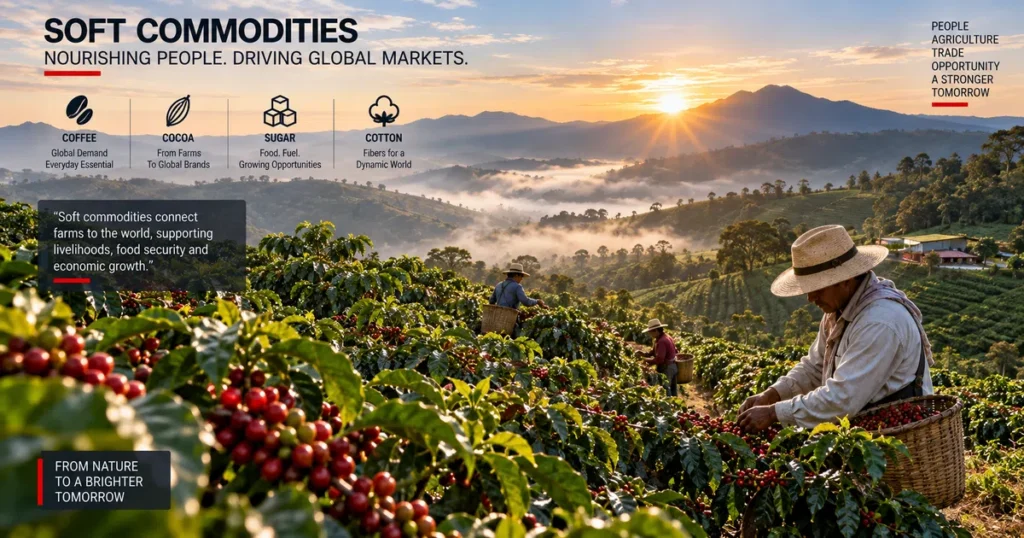
In global economics and financial markets, soft commodities generally refer to raw agricultural goods and livestock that are cultivated, grown, and harvested rather than extracted or mined from geological reserves. In derivatives-market usage, “softs” often refers specifically to tropical cash crops such as coffee, cocoa, sugar, and cotton, while the broader agricultural commodity universe also encompasses grains, oilseeds, and livestock, in clear contrast to mined hard commodities such as crude oil, copper, and gold.
Unlike non-renewable resources, whose extraction depends on geological discovery and multi-year engineering cycles, soft commodities operate under the discipline of biological reproduction, annual planting schedules, and unpredictable meteorological conditions. A sudden cold snap across the high-altitude plateaus of Brazil, a monsoon delay in South Asia, or excessive rainfall across West African cocoa belts can immediately disrupt export availability, triggering rapid percentage price adjustments across international derivatives markets.
Soft commodities trade on major international derivatives venues, led by the Intercontinental Exchange (ICE) and the Chicago Board of Trade (CBOT/CME Group). Because they provide essential caloric energy, stimulants, and textile fibers to the world economy, shifts in their pricing directly impact food manufacturing margins, consumer grocery indices, and the sovereign export earnings of developing economies, connecting directly to the market mechanics explored in our comprehensive guide on commodity prices.
Executive Summary: What Are Soft Commodities?
Quick Answer: What Are Soft Commodities?
Soft commodities are agricultural products that are cultivated, grown, and harvested rather than mined or drilled. In formal financial and derivatives market classifications, the term “softs” is used primarily to denote tropical cash crops—specifically coffee, cocoa, sugar, cotton, and frozen concentrated orange juice (FCOJ). They are characterized by seasonal planting and harvest schedules, biological perishability, high sensitivity to weather phenomena (such as El Niño and La Niña), and commodity-specific harvesting, processing, grading, and storage requirements needed to meet exchange delivery rules.
To understand how soft commodities are categorized across global trading venues, consider their structural position within the broader agricultural and extractive matrix:
                          ┌──────────────────────────────────────────────┐
                          │         TAXONOMY OF RAW COMMODITIES          │
                          └──────────────────────┬───────────────────────┘
                                                 │
         ┌───────────────────────────────────────┴───────────────────────────────────────┐
         │                                                                               │
         ▼                                                                               ▼
┌────────────────────────────────────────┐                     ┌────────────────────────────────────────┐
│ SOFT COMMODITIES (AGRICULTURAL)        │                     │ HARD COMMODITIES (EXTRACTED)           │
├────────────────────────────────────────┤                     ├────────────────────────────────────────┤
│ * Origin: Cultivated crops & livestock │                     │ * Origin: Subsurface mining & drilling │
│ * Resource Base: Renewable biological  │                     │ * Resource Base: Non-renewable geology │
│ * Supply Cycle: Annual / seasonal      │                     │ * Supply Cycle: Multi-year CapEx builds│
│ * Perishability: Higher / biological   │                     │ * Perishability: Non-perishable        │
│ * Core Softs: Coffee, Cocoa, Sugar     │                     │ * Examples: Crude Oil, Copper, Gold    │
└───────────────────┬────────────────────┘                     └───────────────────┬────────────────────┘
                    │                                                              │
                    └──────────────────────────────┬───────────────────────────────┘
                                                   │
                                                   ▼
                    ┌─────────────────────────────────────────────────────────────┐
                    │ COMMON MARKET INFRASTRUCTURE                                │
                    ├─────────────────────────────────────────────────────────────┤
                    │ * Certified exchange contract specifications                │
                    │ * Central counterparty clearing and margin management       │
                    │ * Licensed warehouses and delivery facilities where         │
                    │   applicable                                                │
                    └─────────────────────────────────────────────────────────────┘
The fundamental properties of soft commodities include:
- Renewable Biological Production: Soft commodities regenerate across natural agronomic seasons. Supply can be expanded or contracted in subsequent crop years by adjusting planted acreage and input applications.
- Perishability and Storage Friction: Raw agricultural goods are subject to moisture decay, fermentation degradation, insect infestation, and mold. Storing them requires specialized facilities designed to preserve quality, introducing continuous carrying costs into forward curve pricing.
- Geographical Concentration in Emerging Markets: The primary production of major tropical softs is concentrated in tropical equatorial regions—such as South America (Brazil, Colombia), West Africa (Côte d’Ivoire, Ghana), and Southeast Asia (Indonesia, Vietnam)—while consumption is centered in North American, European, and Asian urban centers.
Soft vs. Hard Commodities: Core Structural Differences
Quick Answer: What Is the Difference Between Soft and Hard Commodities?
The core difference lies in their origin, renewal mechanism, and storage biology: soft commodities are renewable agricultural goods grown above ground that face biological perishability and seasonal crop cycles, whereas hard commodities are non-renewable minerals and hydrocarbons extracted from below ground that require multi-year engineering investments and do not biologically decay.
+---------------------------------------------------------------------------------------------------+
|                           SOFT COMMODITIES VS. HARD COMMODITIES                                   |
+---------------------+-----------------------------+-----------------------+-----------------------+
| DIMENSION           | SOFT COMMODITIES            | HARD COMMODITIES      | ECONOMIC SIGNIFICANCE |
+---------------------+-----------------------------+-----------------------+-----------------------+
| **Origin**          | Agricultural farming,       | Geological deposits;  | Arable soil & climate |
|                     | tropical plantation botany  | subsurface extraction | vs. mineral rights    |
+---------------------+-----------------------------+-----------------------+-----------------------+
| **Renewability**    | Renewable through seasonal  | Non-renewable finite  | Crop acreage response |
|                     | planting and biological care| planetary deposits    | vs. reserve depletion |
+---------------------+-----------------------------+-----------------------+-----------------------+
| **Supply Cycle**    | Annual harvest windows;     | Multi-year capital    | Short-term weather    |
|                     | many tree crops have        | projects (mines/wells)| vulnerability         |
|                     | multi-year maturation lags  |                       |                       |
+---------------------+-----------------------------+-----------------------+-----------------------+
| **Perishability**   | Higher; susceptible to mold,| Highly durable under  | Significant carrying  |
|                     | moisture, rot, and insects  | proper containment    | cost and storage fees |
+---------------------+-----------------------------+-----------------------+-----------------------+
| **Primary Risks**   | Frosts, droughts, excessive | Resource depletion,   | Climate anomalies vs. |
|                     | rain, plant crop diseases   | political permits,    | engineering CapEx     |
|                     | (e.g., rust, black pod)     | energy input inflation| and drilling costs    |
+---------------------+-----------------------------+-----------------------+-----------------------+
| **Primary Venues**  | ICE Futures US/Europe, CBOT,| NYMEX, COMEX, LME,    | Specialized exchanges |
|                     | Euronext, MCX, NCDEX        | ICE Europe Energy     | and regional hubs     |
+---------------------+-----------------------------+-----------------------+-----------------------+
The Four Major Tropical Soft Commodities: Coffee, Cocoa, Sugar, and Cotton
Quick Answer: What Are the Main Soft Commodities Covered in This Guide?
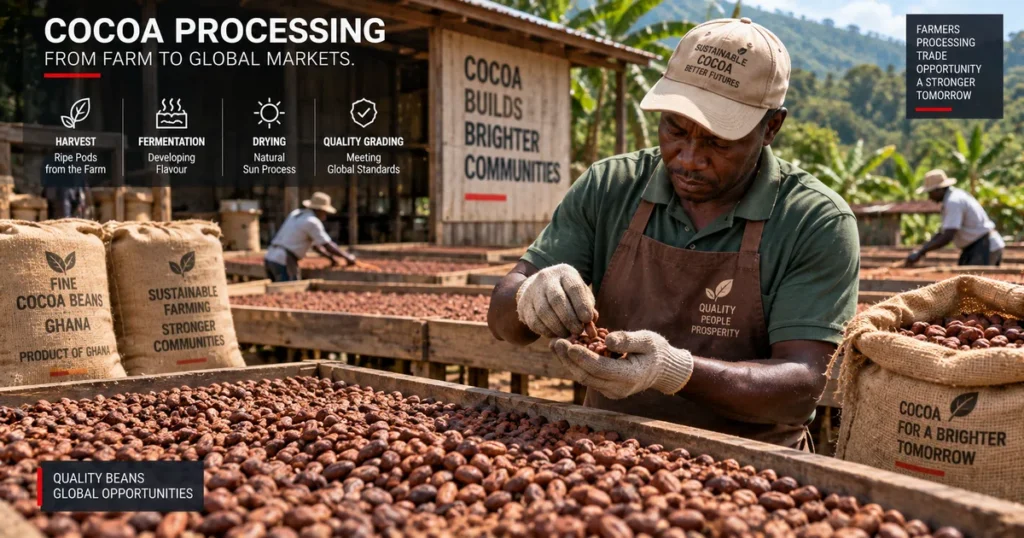
In professional futures trading, the four major tropical soft commodities covered in this guide are Coffee (Arabica and Robusta), Cocoa, Sugar (Raw Sugar No. 11 and White Sugar No. 5), and Cotton (Cotton No. 2). Alongside specialized contracts such as frozen concentrated orange juice (FCOJ-A), these contracts include several of the major internationally traded soft-commodity benchmarks on the Intercontinental Exchange (ICE).
                          ┌──────────────────────────────────────────────┐
                          │         MAJOR TROPICAL SOFTS IN THIS GUIDE   │
                          └──────────────────────┬───────────────────────┘
                                                 │
         ┌───────────────────────────────────────┼───────────────────────────────────────┐
         │                                       │                                       │
         ▼                                       ▼                                       ▼
┌──────────────────┐                   ┌──────────────────┐                   ┌──────────────────┐
│ COFFEE (`KC`/`RC`)                   │ COCOA (`CC`/`C`) │                   │ SUGAR (`SB`/`W`) │
├──────────────────┤                   ├──────────────────┤                   ├──────────────────┤
│ * Arabica (Mild) │                   │ * West African   │                   │ * Raw Cane Sugar │
│ * Robusta (Bold) │                   │   production hub │                   │ * Refined Beet   │
│ * Brazil/Vietnam │                   │ * Confectionery  │                   │ * Food vs Ethanol│
└──────────────────┘                   └──────────────────┘                   └──────────────────┘
                                                 │
                                                 ▼
                                       ┌──────────────────┐
                                       │ COTTON (`CT`)    │
                                       ├──────────────────┤
                                       │ * Natural fiber  │
                                       │ * Textile mills  │
                                       │ * US/India/China │
                                       └──────────────────┘
1. Coffee: Arabica vs. Robusta
Global commercial coffee relies on two primary botanical species:
- Coffea Arabica (ICE “KC” Contract): Arabica accounts for the majority of global coffee production and exports. Typically grown at higher elevations than Robusta, Arabica offers a delicate, aromatic flavor profile preferred by specialty roasters. Brazil and Colombia are the dominant global producers. Traded on ICE Futures U.S. in 37,500-pound contracts quoted in cents per pound.
- Coffea Canephora / Robusta (ICE Europe “RC” Contract): Grown at lower altitudes, Robusta is hardier, contains roughly double the caffeine concentration of Arabica, and exhibits greater resistance to pests and heat. It is widely used in instant coffee blends, commercial espresso extractions, and lower-cost retail products. Vietnam is the world’s largest Robusta exporter. Traded on ICE Europe in 10-metric-ton contracts quoted in US Dollars per ton.
- The Arabica–Robusta Spread and Commercial Substitution: Roasters adjust their commercial blends based on the price differential between Arabica and Robusta. When Arabica prices surge due to adverse weather events in South America, roasters can increase the proportion of Robusta in mass-market commercial formulas, inducing commercial substitution.
2. Cocoa: West African Dominance and Grinding Margins
Cocoa is derived from the dried and fully fermented seeds of Theobroma cacao, native to tropical rainforest belts:
- Extreme Geographical Concentration: A large majority of the world’s cocoa supply originates in just two adjacent West African nations: Côte d’Ivoire and Ghana. This severe geographical concentration makes the global chocolate industry vulnerable to localized West African weather events (such as the dry, dusty Harmattan winds), transport bottlenecks, and regional fungal epidemics (such as black pod disease and Cocoa Swollen Shoot Virus).
- The Two Benchmark Contracts: Cocoa trades on ICE Futures U.S. (Contract code
CC, priced in USD per metric ton) and ICE Futures Europe (Contract codeC, priced in British Pounds Sterling per metric ton). - Processor Grinding Economics: Processor economics can be assessed using cocoa-product price relationships, including the relative value of cocoa butter (the high-value fatty ingredient in confectionery) and cocoa powder (used in baking and beverages) relative to underlying bean costs.
3. The Sugar Complex: Food Sweeteners vs. Biofuels
- Sugar No. 11 (ICE
SB): The world benchmark contract for physical raw cane sugar delivered FOB (Free on Board) at receiver ports across producing nations. Traded in 112,000-pound contracts. - White Sugar No. 5 (ICE Europe
W): The international benchmark for refined, crystallized white sugar, traded in 50-metric-ton contracts. - The White Sugar Premium: The price difference between refined white sugar and raw cane sugar represents the refining margin (the “white premium”). When refiners face high energy costs or trade measures such as export bans from refining nations, the white premium can widen.
4. Cotton No. 2: The Textile Fiber Benchmark
Cotton (Gossypium) is the most widely utilized natural fiber in the global textile industry:
- The ICE Cotton No. 2 Contract (
CT): Has a 50,000-pound net contract size and specifies minimum standards for basis grade and staple length. Major global producers include China, India, the United States, and Brazil. - Industrial Determinants: Unlike food softs whose demand is relatively stable across economic recessions, cotton consumption is pro-cyclical, tracking retail apparel sales, disposable consumer income, and competition from synthetic polyester petroleum-based fibers.
The Sugar and Sweeteners Complex: Cane, Beet, and Ethanol Dynamics
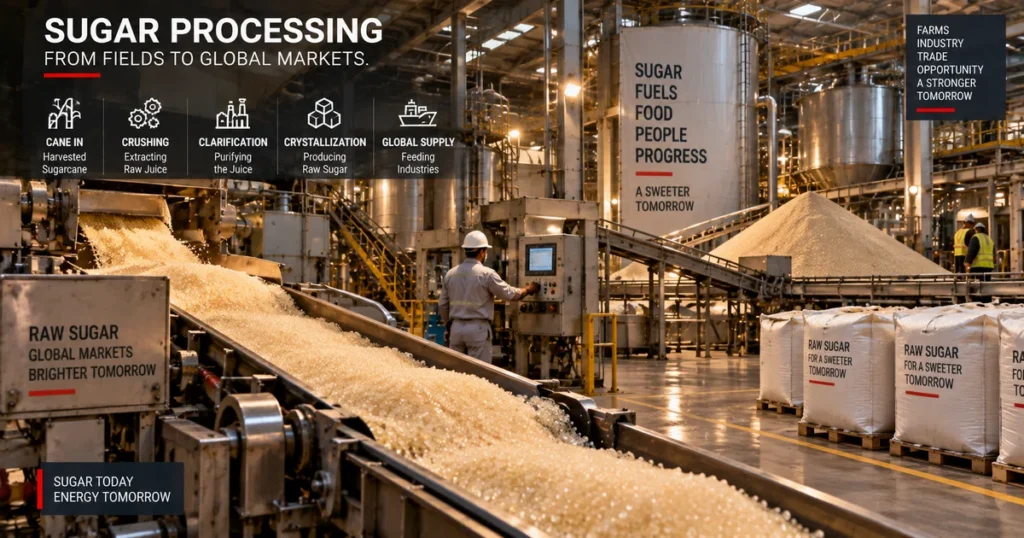
Quick Answer: How Do Sugar Markets Function?
Sugar pricing is unique among soft commodities because it operates at the intersection of food consumption and global energy policy. Major producers like Brazil can dynamically adjust their processing capacity between producing raw sugar for human consumption and distilling fuel ethanol for automobiles, creating an important link between sugar markets, ethanol economics, and global energy prices.
The global sugar market is characterized by dual agricultural feedstocks and dynamic sugar-versus-ethanol allocation economics:
                                  ┌───────────────────────────┐
                                  │   RAW HARVESTED FEEDSTOCK │
                                  └─────────────┬─────────────┘
                                                │
         ┌──────────────────────────────────────┴──────────────────────────────────────┐
         │                                                                             │
         ▼                                                                               ▼
┌─────────────────────────────────┐                           ┌─────────────────────────────────┐
│ SUGAR CANE (TROPICAL)           │                           │ SUGAR BEET (TEMPERATE)          │
├─────────────────────────────────┤                           ├─────────────────────────────────┤
│ * Location: Brazil, India,      │                           │ * Location: European Union,     │
│   Thailand, Australia           │                           │   United States, Russia         │
│ * Processing: Cane mills        │                           │ * Processing: Extraction plants │
│ * Dual Utility: Sugar OR Ethanol│                           │ * Primary Uses: Sugar & Ethanol │
└────────────────┬────────────────┘                           └────────────────┬────────────────┘
                 │                                                             │
                 ▼                                                             ▼
┌───────────────────────────────────────────────────────────────────────────────────────────────┐
│ THE BRAZILIAN CRUSH ARBITRAGE (SUGAR VS. ETHANOL ALLOCATION)                                  │
├───────────────────────────────────────────────────────────────────────────────────────────────┤
│ * Higher Energy/Gasoline Prices ──► Stronger Ethanol Economics ──► Potential Ethanol Shift    │
│ * Lower Energy/Gasoline Prices  ──► Weaker Ethanol Economics   ──► Potential Sugar Shift      │
└───────────────────────────────────────────────────────────────────────────────────────────────┘
The Brazilian Flex-Fuel Transmission Mechanism
Brazil is the world’s largest exporter of raw cane sugar. Its domestic automotive fleet is largely “flex-fuel,” capable of running on hydrous ethanol or gasoline blended with anhydrous ethanol:
- The Energy Link: When global petroleum and retail gasoline prices rise, Brazilian domestic demand for sugarcane-based ethanol strengthens.
- The Mill Allocation Shift: Brazilian industrial crushing mills can shift a larger share of available cane processing capacity toward ethanol rather than sugar, depending on relative sugar, gasoline, and ethanol economics.
- The Global Sugar Balance: Diverting sugarcane processing toward transport fuel can reduce the volume of raw sugar available for export, potentially supporting ICE Sugar No. 11 prices, all else equal, a dynamic evaluated in our analysis of what is a commodity.
Fibers and Industrial Crops: Cotton and Natural Rubber
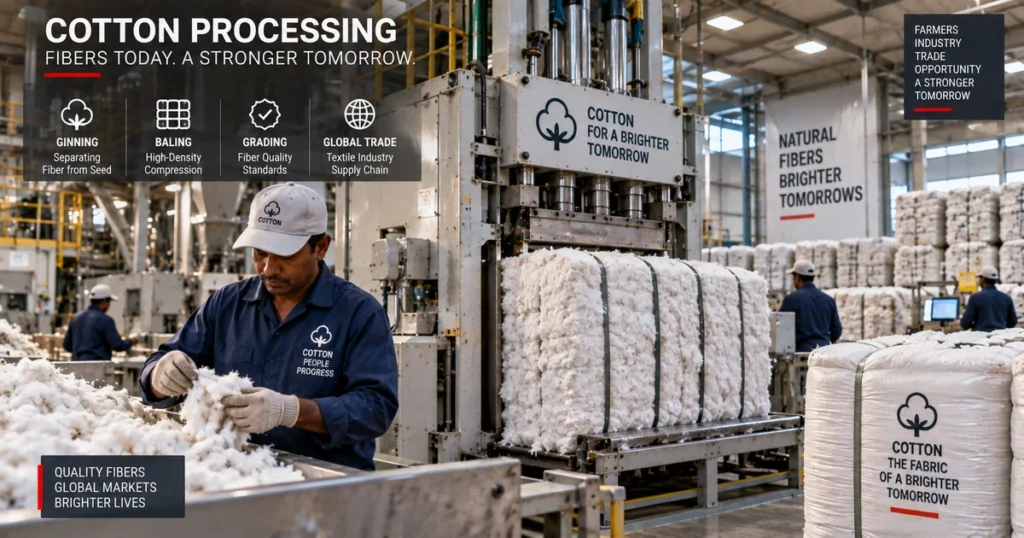
Quick Answer: What Industrial Crops Are Classified as Soft Commodities?
In addition to food crops, soft commodities include industrial non-food agricultural raw materials, most notably cotton (traded on ICE) and natural rubber (traded on the Singapore Exchange and Osaka Exchange). These raw materials provide flexible physical fibers and elastomeric polymers essential for automotive tire manufacturing and textile production.
+---------------------------------------------------------------------------------------------------+
|                           INDUSTRIAL AGRICULTURAL COMMODITIES                                     |
+---------------------+-----------------------------+-----------------------+-----------------------+
| COMMODITY           | PRIMARY END USES            | MAJOR PRODUCING HUBS  | KEY BENCHMARK VENUES  |
+---------------------+-----------------------------+-----------------------+-----------------------+
| **Cotton (`CT`)**   | Apparel, industrial fabrics,| United States, China, | ICE Futures U.S.,     |
|                     | medical gauze, denim        | India, Brazil         | MCX (India), ZCE      |
+---------------------+-----------------------------+-----------------------+-----------------------+
| **Natural Rubber**  | Automotive pneumatic tires, | Thailand, Indonesia,  | SGX (Singapore),      |
| (`TSR20` / `RSS3`)  | conveyor belts, medical PPE | Vietnam, Malaysia     | OSE (Japan), SHFE     |
+---------------------+-----------------------------+-----------------------+-----------------------+
Natural Rubber: The Tree-Crop Automotive Input
Harvested as latex sap from the bark of Hevea brasiliensis trees, natural rubber is a critical industrial polymer:
- The Heavy-Duty Tire Application: While synthetic petroleum-based rubbers are widely used in consumer passenger tires, many heavy-duty applications rely heavily on natural rubber because of its tear resistance, fatigue performance, and heat-management characteristics, particularly in commercial aircraft landing gear, mining haul truck tires, and industrial machinery.
- The Long Maturation Cycle: Rubber trees require approximately 5 to 7 years after planting before tapping can begin, and they produce economic latex yields for 20 to 25 years. This botanical constraint prevents natural rubber producers from quickly adjusting supply in response to sudden automotive manufacturing expansions.
The Upstream Agricultural Value Chain: Planting, Weather, and Harvesting
Quick Answer: How Does the Agricultural Value Chain Function?
The soft commodity value chain progresses through distinct botanical and agronomic phases: Field Preparation and Planting (or multi-year tree maturation), Crop Development and Meteorological Exposure, Harvesting and Post-Harvest Curing (drying, fermenting, or ginning), and Transport to approved storage or delivery facilities, where applicable for grading, sampling, and quality inspection.
Understanding the operational progression of agricultural goods clarifies why soft commodity price volatility is heavily clustered around specific months of the calendar year:
┌─────────────────┐       ┌─────────────────┐       ┌─────────────────┐       ┌─────────────────┐
│     PHASE 1     │  ──►  │     PHASE 2     │  ──►  │     PHASE 3     │  ──►  │     PHASE 4     │
│ Planting / Tree │       │ Weather & Crop  │       │ Harvest, Curing │       │ Port Delivery,  │
│ Development     │       │ Maturation      │       │ & Fermentation  │       │ Grading & Sample│
│ (Annual or Tree)│       │ (Vulnerability) │       │ (Physical Yield)│       │ (Exchange Spec) │
└─────────────────┘       └─────────────────┘       └─────────────────┘       └─────────────────┘
- Agronomic Establishment (Phase 1): Annual field crops (cotton, sugar beet) require yearly land preparation, fertilizer application, and mechanical planting. In contrast, tree crops (coffee trees, cocoa trees, rubber trees) require multi-year maturation before reaching commercial production, creating structural supply lags.
- Crop Development and Meteorological Exposure (Phase 2): During flowering and fruit development, crops are vulnerable to meteorological extremes. Unseasonal droughts cause fruit drop, excessive rainfall during flowering washes away blossoms, and sub-zero frost events destroy vegetative foliage.
- Harvesting and Primary Processing (Phase 3): Agricultural crops must be processed promptly after harvesting to prevent biological rot. Cocoa beans undergo microbial fermentation under plantain leaves followed by sun-drying; coffee cherries are either wet-milled or dry-processed to extract green coffee beans; cotton seed is mechanically ginned to separate raw lint from seeds.
- Grading and Warrant Issuance (Phase 4): Standardized bales or bags are delivered to licensed port facilities, where licensed inspectors grade and sample the physical product against exchange contract specifications (assessing moisture content, foreign matter, defective bean counts, and fiber strength), as detailed in our guide on commodity exchange operations.
Physical Storage, Seasonality, and Warehouse Warrant Mechanics
Quick Answer: How Are Soft Commodities Stored and Delivered?
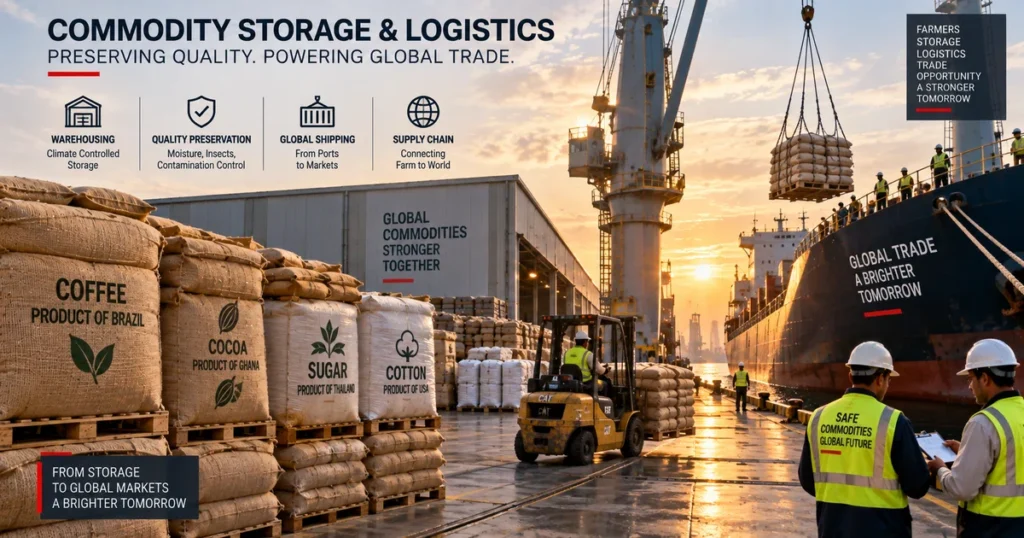
Soft commodities are stored in exchange-approved or licensed warehouses and storage facilities designed to preserve the quality of the specific commodity located at designated maritime export and import ports. Where the relevant exchange contract uses warehouse warrants, the warrant records the delivery entitlement to qualifying physical inventory, allowing market participants to settle derivatives contracts without handling physical bags or bales.
Because agricultural goods naturally deteriorate over time, storage facilities must enforce strict environmental protocols:
1. Managing Biological Depreciation
Unlike physical bars of gold or copper cathodes, soft commodities can lose commercial quality if stored improperly:
- Green Coffee Beans: Absorb ambient odors and moisture if relative humidity remains elevated, resulting in mold growth and rendering the beans ungradable for ICE delivery.
- Cocoa Beans: High moisture triggers internal fatty acid breakdown (increasing free fatty acid levels), which degrades the confectionery properties of cocoa butter.
- Raw Sugar: Hygroscopic crystalline sugar cakes into hardened masses if exposed to high humidity, causing immense handling difficulties at marine discharge ports.
2. Exchange-Approved Delivery Systems
To ensure physical futures contracts converge with the underlying cash market at expiration:
- Commodity exchanges authorize logistics operators across designated port regions (e.g., the Port of New York/New Jersey, New Orleans, Antwerp, Rotterdam, and Hamburg).
- When a merchant deposits qualifying coffee, cocoa, or sugar into a certified warehouse, the facility inspects the lot against exchange grading rules and records the inventory.
- For contracts settled through warrant transfer, delivery can be effected by transferring the relevant electronic warrant according to exchange and clearing rules, as outlined in our guide on commodity exchange mechanics.
Market Dynamics: Hedging, Weather Shocks, and Forward Curves
Quick Answer: What Primary Forces Drive Soft Commodity Prices?
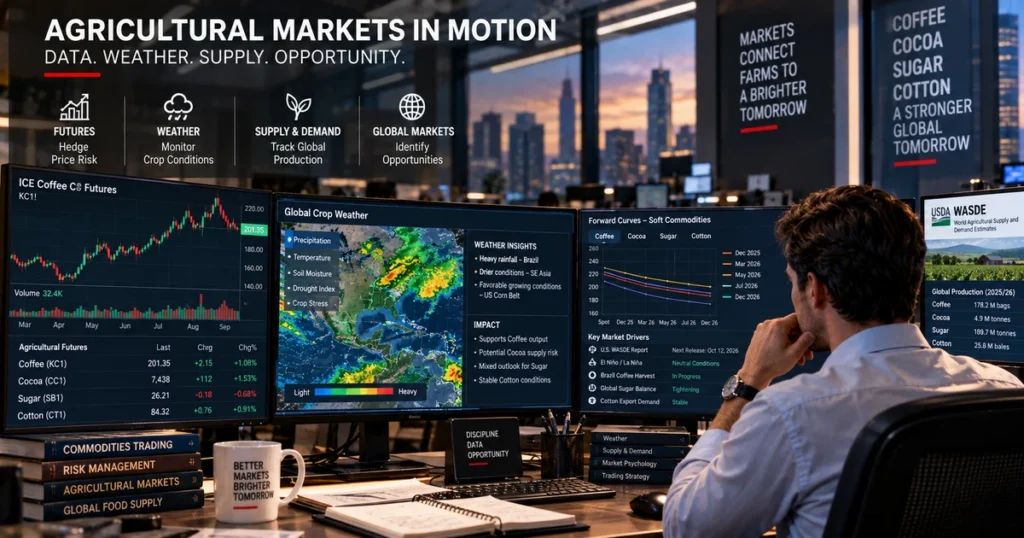
Soft commodity prices are driven by climate anomalies (such as El Niño and La Niña), seasonal harvest cycles, currency fluctuations in exporter nations, and exchange forward curve structures (contango and backwardation). Commercial farmers, exporters, and food conglomerates actively trade futures and options to manage harvest supply risks.
                          ┌──────────────────────────────────────────────┐
                          │         SOFT COMMODITY PRICE DETERMINATION   │
                          └──────────────────────┬───────────────────────┘
                                                 │
         ┌───────────────────────────────────────┴───────────────────────────────────────┐
         │                                                                               │
         ▼                                                                               ▼
┌────────────────────────────────────────┐                     ┌────────────────────────────────────────┐
│ PHYSICAL AGRONOMIC DRIVERS             │                     │ MARKET & MACROECONOMIC DRIVERS         │
├────────────────────────────────────────┤                     ├────────────────────────────────────────┤
│ * Climate Anomalies (El Niño / Frosts) │                     │ * US Dollar Exchange Rate (Valuation) │
│ * Plant Diseases (Rust / Black Pod)    │                     │ * Currency Transmission (BRL / COP)    │
│ * Fertilizer & Energy Input Costs      │                     │ * Forward Curve Geometry (Carry Costs) │
│ * Biennial Bearing Cycles in Trees     │                     │ * Commercial & Managed Money Positioning│
└───────────────────┬────────────────────┘                     └───────────────────┬────────────────────┘
                    │                                                              │
                    └──────────────────────────────┬───────────────────────────────┘
                                                   │
                                                   ▼
                    ┌─────────────────────────────────────────────────────────────┐
                    │ SPOT & FUTURES PRICE FORMATION                              │
                    └─────────────────────────────────────────────────────────────┘
1. The Impact of El Niño and La Niña Cycles
El Niño and La Niña can be major sources of production volatility in tropical agriculture, although their effects vary by region, season, and crop:
- El Niño Conditions: Can alter rainfall and temperature patterns across Southeast Asia and northern South America, at times reducing Robusta coffee yields in Vietnam and sugarcane production in Thailand and India. Simultaneously, it can bring heavier rainfall to southern Brazil.
- La Niña Conditions: Can increase drought risks across parts of the Americas while causing heavier monsoonal rains across Indonesia and Malaysia, at times disrupting palm oil harvesting and sugarcane logistics.
2. The Brazilian Real (BRL) Currency Transmission
Because Brazil is a major exporter of Arabica coffee and cane sugar, the exchange rate of the Brazilian Real against the US Dollar can influence international pricing:
- When the Brazilian Real Weakens (Depreciates): Local Brazilian producers receive a higher price in domestic currency for every pound of sugar or coffee exported (since international benchmarks trade in USD). This can encourage Brazilian growers to sell and hedge harvests on ICE, placing downward price pressure on dollar-quoted international futures contracts, as detailed in our study on interest rates and exchange rates.
- When the Brazilian Real Strengthens (Appreciates): Domestic export returns diminish in local terms, potentially reducing the incentive for growers to accelerate sales and providing support to dollar futures prices.
3. Forward Curve Geometry: Contango vs. Backwardation in Softs
The shape of agricultural forward curves reflects carrying costs, financing, and physical availability:
- Contango: Contango occurs when deferred futures trade above nearby or spot prices, often reflecting carrying costs, financing, storage conditions, and market expectations. Funds rolling long futures positions forward can experience negative roll yield drag.
- Backwardation: Backwardation occurs when nearby or spot prices trade above deferred futures, often reflecting immediate physical tightness, delayed harvests, or regional supply shocks. Long futures investors can experience positive roll contributions over time, dynamics explained in our master guide on commodity prices.
Soft Commodities in India: Spices, Sugar, Cotton, and the Monsoon
Quick Answer: How Do Soft Commodities Trade in India?
India is one of the world’s largest producers and consumers of soft commodities—particularly sugar, cotton, and agricultural spices (jeera, turmeric, coriander). Domestic derivatives trade primarily on the Multi Commodity Exchange (MCX) and the National Commodity & Derivatives Exchange (NCDEX) under the regulatory oversight of the Securities and Exchange Board of India (SEBI).
India’s agricultural economy features regional specialties that interact with global markets:
+---------------------------------------------------------------------------------------------------+
|                            THE INDIAN SOFT COMMODITY COMPLEX                                      |
+---------------------+-----------------------------+-----------------------+-----------------------+
| COMMODITY           | PRIMARY GROWING REGIONS     | KEY DOMESTIC REFERENCES| MACROECONOMIC IMPACT  |
+---------------------+-----------------------------+-----------------------+-----------------------+
| **Sugar Cane**      | Uttar Pradesh, Maharashtra, | Domestic Mandis,      | Export quotas, ethanol|
|                     | Karnataka                   | Fair & Remunerative   | blending mandates, MSP|
+---------------------+-----------------------------+-----------------------+-----------------------+
| **Cotton (Kapas)**  | Gujarat, Maharashtra,       | MCX Cotton Futures,   | Textile exports, farm |
|                     | Telangana                   | Regional Mandis       | employment, MSP floor |
+---------------------+-----------------------------+-----------------------+-----------------------+
| **Spices (Jeera,    | Gujarat, Rajasthan,         | NCDEX Spices Complex  | Global export pricing,|
| Turmeric, Dhaniya)**| Andhra Pradesh              |                       | domestic festive demand|
+---------------------+-----------------------------+-----------------------+-----------------------+
1. The Southwest Monsoon Transmission
The Indian agricultural cycle depends on the annual Southwest Monsoon (June to September). Over 50% of the country’s net sown area relies directly on monsoonal rainfall:
- Favorable Monsoon Rainfall: Favorable rainfall can support crop output and, depending on the crop and broader supply conditions, ease food-price pressures across the domestic economy.
- Deficient or Erratic Rainfall: Poor harvest conditions can increase the likelihood of policy responses such as export restrictions or import measures when authorities seek to manage domestic food availability and stabilize consumer prices.
2. NCDEX and Domestic Price Discovery
While non-agri derivatives trade heavily on MCX, the National Commodity & Derivatives Exchange (NCDEX) specializes in agricultural contracts. Regulated by SEBI, NCDEX provides transparent benchmark discovery for domestic agri-enterprises, utilizing accredited physical delivery centers across producing hubs and electronic warehouse receipts issued through national repositories (such as NERL and CCRL), as detailed in our guide on commodity exchange operations.
How to Invest in Soft Commodities: Investment Vehicles
Quick Answer: How Can Allocators Gain Exposure to Soft Commodities?
Unlike precious metals, investors rarely store physical bags of coffee or sugar. Exposure is gained primarily through Exchange-Traded Products (ETPs), Exchange-Traded Futures & Options on ICE and CBOT, and Agribusiness Equities (shares of global agricultural processors, fertilizer manufacturers, and equipment providers).
+---------------------------------------------------------------------------------------------------+
|                            SOFT COMMODITY INVESTMENT ACCESS PATHWAYS                              |
+---------------------+-----------------------------+-----------------------+-----------------------+
| ACCESS PATHWAY      | REPRESENTATIVE VEHICLES     | PRIMARY ADVANTAGES    | STRUCTURAL LIMITS     |
+---------------------+-----------------------------+-----------------------+-----------------------+
| **Agricultural ETPs | Broad agriculture ETFs,     | High liquidity across | Contango roll drag;   |
| (ETFs & ETNs)**     | single-commodity softs ETNs | standard brokerage    | tracking error vs.    |
|                     |                             | accounts              | physical spot prices  |
+---------------------+-----------------------------+-----------------------+-----------------------+
| **Exchange-Traded   | ICE Coffee (`KC`), Sugar    | Pure price discovery; | Substantial leverage; |
| Futures & Options** | (`SB`), Cocoa (`CC`) futures| capital efficiency    | margin call risk      |
+---------------------+-----------------------------+-----------------------+-----------------------+
| **Agribusiness      | Archer-Daniels-Midland,     | Operating leverage;   | Corporate governance; |
| Producer Equities** | Bunge, Deere & Co., Nutrien | dividend distributions| equity market beta    |
+---------------------+-----------------------------+-----------------------+-----------------------+
Understanding Agribusiness Equity and ETP Exposure
- Commodity ETP Structures: Many commodity ETPs obtain exposure through futures, swaps, or other commodity-linked instruments; some agricultural products may also use equity-based exposure. Futures-based funds face roll-yield mechanics, meaning fund performance can diverge from spot prices during prolonged periods of contango.
- Agribusiness Processing Leverage: Many allocators invest in multinational agricultural supply chain companies or agricultural equipment leaders. These corporations generate margins by managing geographical transportation spreads, storing physical grain, and crushing oilseeds into refined meal and oil, carrying general equity market risks as detailed in our guide on what is market capitalization.
Comparative Analysis: Soft Commodities vs. Hard Commodities, Stocks, and Bonds
Quick Answer: How Do Soft Commodities Compare to Financial Assets?
Soft commodities represent biological raw materials that produce no contractual cash flow, dividend, or bond coupon. Their investment performance is determined by agricultural supply-demand balance, weather events, forward curve roll yields, and seasonal price spikes.
| Dimension / Asset Class | Soft Commodities | Hard Commodities | Corporate Equities (Stocks) | Government Bonds |
| Asset Category | Cultivated Biological Goods | Extracted Real Assets | Corporate Ownership Claim | Sovereign Debt Contract |
| Contractual Cash Flow | None inherently | None inherently | Discretionary Dividends | Contractual Coupon Payments |
| Primary Valuation Basis | Crop Seasonality & Weather | Marginal Extraction & Carry | Discounted Cash Flows (DCF) | Yield to Maturity (YTM) |
| Inflation Sensitivity | Varies by crop & food price | Often positive, but variable | Variable by pricing power | Inflation reduces real yield |
| Supply Elasticity | Moderately Inelastic (Annual) | Highly Inelastic (Multi-Year) | Corporate Capital Output | Sovereign Monetary Policy |
| Primary Risk Drivers | Weather, Frosts, Crop Disease | Resource Depletion, CapEx | Business Execution, Margins | Interest Rates, Duration |
Common Myths vs. Empirical Facts
- Myth: Investing in an agricultural ETF is the same as owning the physical crop spot price.
- Fact: Because agricultural crops perish and cannot be stored directly inside an investment portfolio, agricultural exchange-traded products generally invest in futures contracts or swaps. When forward curves trade in persistent contango, the fund incurs roll yield drag by selling cheaper expiring contracts and purchasing higher-priced deferred contracts, causing long-term fund performance to diverge from spot crop prices.
- Myth: Global food prices are set entirely by speculative financial traders.
- Fact: While speculative capital provides market liquidity, physical crop prices clear where agricultural producers, food processors, and international importing nations buy and sell real physical supply. Most financial participants do not intend to take physical delivery and therefore typically close or roll positions before the delivery process.
- Myth: A drought in one country will always collapse global agricultural supplies.
- Fact: Agriculture is distributed globally across Northern and Southern Hemispheres. A poor harvest in one region (e.g., severe drought in the U.S. Cotton Belt) is frequently counterbalanced by favorable growing seasons in the opposing hemisphere (e.g., strong cotton production in Brazil or India).
- Myth: Soft commodities always follow broader stock market trends.
- Fact: Soft commodity prices can diverge materially from broad equity-market performance because crop-specific weather, disease, and supply conditions can dominate their price formation, operating largely independently of equity benchmark indices like the USA S&P 500.
Frequently Asked Questions
What is the simplest definition of a soft commodity?
A soft commodity is a renewable agricultural raw material that is grown, cultivated, or ranched—such as coffee, cocoa, sugar, cotton, or livestock—rather than mined or extracted from the earth.
What are the four major tropical soft commodities covered in this guide?
The four major tropical soft commodities covered in this guide are Coffee (Arabica and Robusta), Cocoa, Sugar (Raw Cane and Refined White), and Cotton, alongside specialized contracts like frozen concentrated orange juice (FCOJ-A).
Why are soft commodities more perishable than hard commodities?
Soft commodities are organic, biological materials. If exposed to excess moisture, humidity, or temperature swings, raw grains, cocoa beans, and coffee cherries can succumb to mold, insect infestation, microbial fermentation, and rot, requiring climate-controlled or well-ventilated warehousing.
How does El Niño affect soft commodity prices?
El Niño can alter global weather patterns, at times contributing to droughts in Southeast Asia and northern South America while causing excess rainfall in other growing zones. When these weather anomalies restrict physical crop yields, they can place upward pressure on soft commodity prices.
Can an individual investor take physical delivery of a soft commodity futures contract?
Many retail brokers restrict or close positions approaching delivery, while physical delivery is generally handled through procedures designed for eligible commercial participants and clearing members utilizing exchange-licensed warehouse warrants.
Strategic Summary & Core Takeaways
- Renewable Agricultural Products: Soft commodities are cultivated, organic materials—led by tropical cash crops like coffee, cocoa, sugar, and cotton—that form the physical feedstocks for global food, beverage, and textile industries.
- Weather-Driven Supply Shocks: Unlike multi-year mineral extractions, agricultural supply is vulnerable to short-term meteorological anomalies (frosts, droughts, El Niño/La Niña), creating sharp, seasonal price cycles.
- Storage and Quality Preservation: Storing agricultural softs requires specialized warehouse facilities, introducing ongoing carrying costs that influence forward curve contango and backwardation structures.
- Energy and Food Nexus: Sugar exhibits unique price dynamics through the Brazilian crushing allocation, where mills alternate between crystallized food sugar and fuel ethanol based on relative market economics.
- Diverse Exposure Methods: Investors access soft commodities through commodity ETPs, direct exchange-traded derivatives, or shares of global agribusiness supply chain corporations.
Next Reading Suggestions
- What Is a Commodity? The Complete Guide to Fungible Goods, Raw Materials, and Global Market Value
- Hard Commodities: The Complete Guide to Extracted Resources, Energy Markets, and Industrial Metals
- Commodity Prices: How They Are Determined, Key Drivers, and Futures Pricing
- Commodity Exchange: The Complete Guide to Global Trading Hubs, Contract Standardization, and Clearing Mechanics
- What Is Gold? The Complete Guide to Real Money, Store of Value & Why It Matters
- How Stock Prices Are Determined: Market Microstructure, Supply and Demand, and Valuation
- What Is Market Capitalization? The Complete Guide to Market Cap, Company Size, and Valuation
- Interest Rates and Exchange Rates: The Complete Guide to Global Currency Pricing
- Fed Rate Cuts & Global Liquidity: The Complete Guide to Interest Rates, the Fed Balance Sheet, and Asset Markets
- Canada TSX: The Complete Guide to the S&P/TSX Composite Index, Methodology, and Market Structure
- Australia ASX 200: The Complete Guide to the S&P/ASX 200 Index, Methodology, and Market Structure
Author Box & E-E-A-T Verification
Written & Researched By: CurrencyPlans Editorial Research Team
Last Updated & Methodologically Reviewed: September 2026
Editorial Review & Methodological Standards: This educational manual on soft commodities is developed using agronomic research standards, statutory regulatory frameworks, and primary derivatives exchange specifications. Contract delivery terms, warehouse warrant mechanisms, and grading specifications are informed by official publications and rulebooks from the Commodity Futures Trading Commission (CFTC), Intercontinental Exchange (ICE Futures U.S. & Europe), CME Group / CBOT, the Securities and Exchange Board of India (SEBI), the International Coffee Organization (ICO), the International Cocoa Organization (ICCO), the International Sugar Organization (ISO), and the U.S. Department of Agriculture (USDA Foreign Agricultural Service).
Educational References & Market Data Sources
For official contract specifications, agricultural balance sheet estimates, and warehouse delivery rules, consult primary regulatory and statistical portals directly:
- U.S. Commodity Futures Trading Commission (CFTC Agricultural Market Rules): CFTC
- Intercontinental Exchange (ICE Softs: Sugar, Coffee, Cocoa, Cotton Specs): ICE Softs
- CME Group / Chicago Board of Trade (Agricultural Products & Rules): CME Group
- U.S. Department of Agriculture (World Agricultural Supply and Demand Estimates – WASDE): USDA WASDE
- International Coffee Organization (Global Coffee Market Statistics & Production): ICO
- International Cocoa Organization (Quarterly Cocoa Statistics & Butter Ratios): ICCO
- International Sugar Organization (World Sugar Balance & Market Reports): ISO
- Securities and Exchange Board of India (SEBI Agricultural Commodity Framework): SEBI
- National Commodity & Derivatives Exchange of India (NCDEX Agricultural Contracts): NCDEX
Educational Disclaimer
This guide is prepared strictly for educational, research, and informational purposes and does not constitute personalized financial, investment, trading, or tax advice. Commodity spot markets, derivative futures contracts, and natural resource equities carry substantial market and capital risks. Past market pricing patterns and historical futures forward curve shapes do not guarantee future financial returns. Always conduct independent due diligence and consult a licensed fiduciary financial advisor before allocating investment capital.

