

The dollar price today serves as the central pulse of global macroeconomic liquidity, orchestrating the valuation of commodities, debt instruments, and cross-border trade balances across every continent. As the world’s undisputed reserve currency, the greenback does not merely reflect American domestic productivity. Instead, it functions as a global economic thermometer. When the Federal Reserve adjusts its monetary levers, or when geopolitical fault lines fracture, the resulting waves reshape corporate balance sheets from Frankfurt to New Delhi. Understanding the current trajectory of the dollar requires moving past superficial ticker updates and diving straight into the deep structural mechanics of international finance.
At a Glance
| Metric / Era | Core Value / Current Level | Systemic Importance & Impact |
| US Dollar Index (DXY) | ~100.80 – 101.50 (July 2026) | Measures the greenback against a basket of six major global currencies (dominated by the Euro at 57.6%). |
| Federal Funds Rate | 3.50% – 3.75% | The foundational cost of leverage set by the Fed, dictating global capital yields and interest rate spreads. |
| US CPI Inflation | 4.2% | The core driver of the Federal Reserve’s “higher-for-longer” hawkish monetary regime. |
| Bretton Woods (1944) | Fixed at $35 per Gold Ounce | Established the institutional framework for the absolute global dominance of the US dollar. |
| The Nixon Shock (1971) | Unbacked Pure Fiat Regime | Decoupled the dollar from gold, initiating the modern era of floating, speculative forex trading. |
The Macro Dynamics of the Dollar Price Today
To decipher why the dollar price today trades at its current premium, we must analyze the structural forces driving international capital allocation. The foreign exchange market operates as a relentless, zero-sum game of relative value. Capital naturally flows to jurisdictions that offer the highest risk-adjusted real yields. When economic conditions in the United States display unexpected resilience compared to eurozone stagnation or structural issues in emerging markets, global portfolio managers aggressively reallocation their assets to take advantage of the premium.
[Resilient US Growth & 4.2% Inflation]
               │
               ▼
[Fed Keeps Interest Rates Elevated at 3.50%-3.75%]
               │
               ▼
[Widening Yield Spreads vs G10 Currencies]
               │
               ▼
[Global Capital Inflows Chase US Fixed Income]
               │
               ▼
[Stronger Dollar Price Today (DXY Above 100)]
Following the Federal Reserve’s recent monetary policy updates, the central bank’s dot plot revealed a decidedly hawkish tilt. With US consumer price index (CPI) inflation hovering uncomfortably at 4.2%, the central bank opted to hold the benchmark interest rate elevated at 3.50% to 3.75%. This “higher-for-longer” monetary stance effectively pulled the rug out from under early-year short sellers who had aggressively bet on sweeping rate cuts.
When the Fed holds interest rates higher while the European Central Bank (ECB) or the Bank of Japan face domestic growth slowdowns, a highly lucrative yield differential opens up. International institutional investors execute the classic carry trade: borrowing in lower-yielding currencies to purchase higher-yielding US Treasuries. This massive capital migration creates a baseline of structural demand that continually elevates the dollar price today.
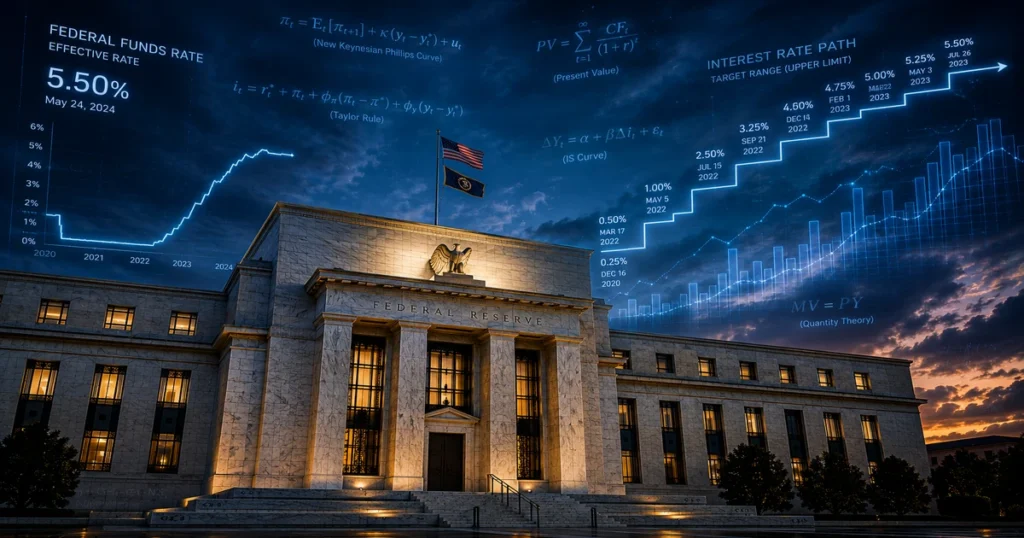
The mechanics of this yield differential act as a massive tractor beam for global liquidity. Commercial banks, sovereign wealth funds, and private equity firms all look for the safest possible vehicle that yields a positive real return. With the dollar price today backed by short-duration US Treasury bills yielding significantly more than German Bunds or Japanese Government Bonds (JGBs), the choice for asset managers becomes an absolute no-branner.
This flow of funds is not just a statistical anomaly; it directly alters daily transactional demand. To buy these high-yielding American assets, international players must first sell their native currencies and purchase spot US dollars, continuously driving up the value of the dollar price today on the international stage.
From Bretton Woods to Petrodollars: The Roots of Supremacy
The absolute dominance embedded within the dollar price today is not an historical accident; it is an engineered geopolitical architecture. The foundational blueprint was drawn in July 1944 at the Bretton Woods Conference in New Hampshire. There, delegates from 44 nations established a monetary system where global currencies were pegged directly to the US dollar, which in turn was anchored to gold at a fixed rate of $35 per ounce.
“The central bank of central banks was born not out of free-market equilibrium, but through post-WWII geopolitical realpolitik that concentrated the vast majority of the world’s gold reserves inside American vaults.”
This system operated smoothly until the fiscal strains of the Vietnam War and sweeping domestic spending initiatives eroded foreign confidence in Uncle Sam’s gold reserves. On August 15, 1971, President Richard Nixon abruptly suspended the dollar’s convertibility into gold. This historic “Nixon Shock” transformed the global monetary landscape into a pure fiat regime, allowing the dollar price today to float freely against changing market sentiments and speculative capital flows.
To preserve global demand for unbacked greenbacks, the United States struck a legendary deal with Saudi Arabia in 1974. In exchange for military protection, technical assistance, and advanced hardware, the Kingdom agreed to price all crude oil exports exclusively in US dollars. This birthed the petrodollar recycling loop, forcing every industrialized nation to maintain deep dollar reserves just to secure their basic energy needs.
Every time a country like Japan, Germany, or South Korea needed to power their domestic manufacturing bases, they were structurally required to acquire the greenback first, creating a perpetual floor underneath the global value of the dollar. This structural arrangement permanently tied the world’s most critical energy commodity directly to the valuation of the currency, ensuring that the dollar price today remains insulated from the standard vulnerabilities that typically cause traditional fiat currencies to collapse under heavy debt loads.
Global Impact: How a Strong Dollar Shakes the World
When the dollar price today climbs significantly higher—as demonstrated by the US Dollar Index (DXY) breaking forcefully above the 100 mark to hit 13-month highs near 101.50—it acts as an aggressive tightening mechanism for the rest of the planet. This phenomenon is deeply rooted in the structural mechanics of emerging market finance and global supply chains.
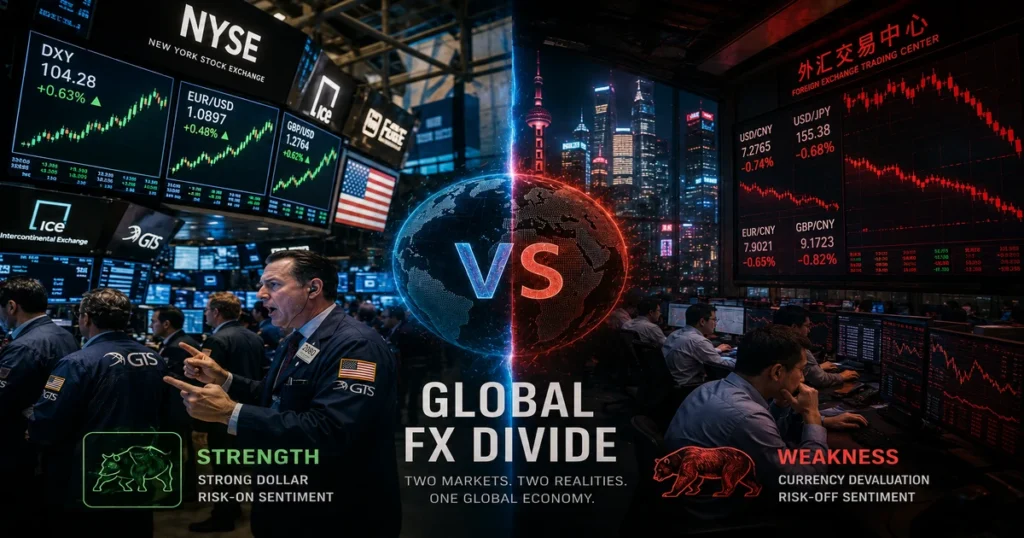
Contextual Analysis: Systemic Exchange Rate Pressures
| Currency / Region | Local Exchange Rate Reality | Primary Macro Vulnerability | Central Bank Countermeasure |
| Indian Rupee (INR) | Sinking past 85.00+ per USD | Heavy dependence on imported Brent crude oil priced exclusively in dollars; persistent FII equity outflows. | The Reserve Bank of India (RBI) drawing down forex reserves to arrest sharp devaluations and maintain stability. |
| Eurozone (EUR) | Depressed toward 1.08 – 1.10 range | Severe stagnation in industrial output coupled with a widening interest rate gap versus the Federal Reserve. | Cautious monetary easing holding back the currency while attempting to stave off a broader systemic recession. |
| Japanese Yen (JPY) | Sustained pressure near historic lows | Entrenched structural yield curve control historical baggage; massive energy import costs. | Intermittent, direct currency market interventions combined with ultra-slow, painful interest rate normalization. |
Because a staggering percentage of cross-border corporate debt is denominated in greenbacks, a rising dollar price today immediately expands the real debt-servicing costs for foreign borrowers. If a Brazilian manufacturing conglomerate or an Indian infrastructure firm earns revenues in local currency but must repay loans in dollars, a 10% appreciation in the DXY effectively increases their leverage by 10% overnight without them taking on any new debt.
Furthermore, because global commodities like copper, wheat, and natural gas are priced in dollars, a strong greenback imports inflation directly into foreign economies. This forces international central banks to raise their own interest rates defensively, risking domestic recessions simply to shield their native currencies from complete devaluation.
The downstream effects of a elevated dollar price today also manifest in corporate profitability across developed markets. When the US dollar rallies, American multinational firms face severe headwinds when consolidating earnings from their foreign subsidiaries. A dollar earned in euros or yen translates into fewer dollars back home on the balance sheet, frequently leading to earnings misses on Wall Street.
Conversely, for foreign exporters selling into the United States, a robust dollar price today represents a massive competitive advantage, making their goods incredibly cheap for American consumers. However, this trade advantage is often entirely offset by the rising costs of raw material inputs, which must still be purchased in high-priced dollars on the global spot market.
The Mechanics of Forecasting: Reading the DXY and Fed Data
Professional traders looking to position themselves around the dollar price today do not guess; they meticulously monitor high-impact macroeconomic indicators and liquidity gauges. The primary anchor is the US Dollar Index (DXY), which tracks the greenback against a basket of six major global currencies.
$$\text{DXY} = 50.14342722 \times \text{EURUSD}^{-0.576} \times \text{USDJPY}^{0.136} \times \text{GBPUSD}^{-0.119} \times \text{USDCAD}^{0.091} \times \text{USDSEK}^{0.042} \times \text{USDCHF}^{0.036}$$
This mathematical formula highlights exactly why watching the Eurozone is completely non-negotiable for dollar traders—the Euro single-handedly controls 57.6% of the index’s directional movement. When the Euro stumbles due to structural weakness or geopolitical tension, the dollar price today automatically receives a mathematical boost, irrespective of what is happening inside the US domestic economy.

Beyond technical chart patterns and key support zones, tracking the dollar price today hinges on two critical data releases:
- Non-Farm Payrolls (NFP): Released on the first Friday of every month, this report measures net job creation. A surprisingly soft print can instantly cool expectations for future interest rate hikes, causing a temporary pullback in the value of the dollar.
- The Fed Funds Futures Market: Traded on the Chicago Mercantile Exchange (CME), this tool tracks the implied probability of upcoming policy shifts. When the market prices in a high probability of a rate hike, capital front-runs the move, bidding up the spot price of the dollar well in advance of the actual announcement.
De-Dollarization: Is the Greenback’s Crown Slipping?
In modern financial commentary, a massive amount of ink has been spilled over the concept of “de-dollarization.” Critics point to the expansion of the BRICS bloc (Brazil, Russia, India, China, South Africa, alongside new entrants) and their vocal efforts to clear bilateral trade using local currencies or alternative digital ledgers as proof that the end of dollar hegemony is near. They argue that weaponizing the SWIFT banking system via sanctions has accelerated the global drive to find viable alternatives to the dollar price today.
However, analyzing the structural realities behind the dollar price today reveals that these concerns are largely exaggerated. A true global reserve currency requires three core pillars: deep and highly liquid capital markets, a transparent and predictable rule of law, and a massive, persistent structural trade deficit that continuously supplies the rest of the world with liquid assets.
While China’s SWIFT cross-border usage has marked steady gains, the Renminbi remains heavily locked down by strict domestic capital controls. Global investors are fundamentally hesitant to park trillions of dollars in an economic ecosystem where capital cannot be pulled out freely during a market crisis. The US dollar still anchors over 85% of all foreign exchange transactions and accounts for nearly 60% of allocated global foreign exchange reserves. While alternative financial networks are certainly expanding, the network effects protecting the greenback ensure it remains the ultimate safe haven during times of global stress, continually preserving the strength of the dollar price today.
Navigating Currency Volatility: A Blueprint for Corporates and Investors
For multinational corporations, import-export operators, and retail portfolios alike, an erratic dollar price today introduces severe financial risks that can wipe out operating margins if left unhedged. Managing this exposure requires a disciplined framework utilizing modern financial instruments rather than trying to perfectly time the market.
- Forward Contracts: This tool allows businesses to completely eliminate spot market volatility by locking in an exact exchange rate today for a transaction that will occur up to 12 months in the future. If an importer must pay a US supplier $500,000 in late autumn, locking in a forward contract removes the risk of a sudden dollar surge.
- Currency Options: Options give companies the right, but not the obligation, to exchange currencies at a predetermined rate. This functions like an insurance policy; you pay an upfront premium to protect against catastrophic losses while keeping the upside open if the spot market moves in your favor.
- Tranche Diversification: Rather than executing massive international transfers in a single transaction, smart operators split their capital requirements into smaller tranches spread across weeks. This averages out entry points and eliminates the risk of trading at an isolated market peak.
Frequently Asked Questions
What factors drive the fluctuations in the dollar price today?
The dollar price today is primarily driven by the interest rate differentials between the Federal Reserve and other major global central banks, real GDP growth trends, inflation data releases, and global risk sentiment. When geopolitical tensions escalate, the dollar experiences massive safe-haven inflows regardless of underlying US domestic economic issues.
How does the US Dollar Index (DXY) impact retail forex traders?
The DXY serves as the ultimate benchmark for overall dollar strength. Because major pairs like EUR/USD, GBP/USD, and AUD/USD are priced directly against the greenback, a breakout in the DXY tells retail traders to look for short opportunities on those pairs, avoiding the mistake of trading against a powerful macro trend.
Will the Federal Reserve’s interest rate cuts weaken the dollar price today?
In isolation, yes. Lower interest rates reduce the yield paid on US dollar deposits and government bonds, making them less attractive to international capital. However, if foreign central banks are cutting interest rates even faster due to worse domestic economic slowdowns, the dollar can easily remain strong despite its own rate cuts.
Why do oil and commodity prices drop when the dollar price today strengthens?
Because global commodities are invoiced in US dollars, a stronger greenback makes those raw materials more expensive for buyers using weaker local currencies. This dampens international demand, forcing producers to lower prices to clear out their inventories.
Can digital assets or cryptocurrencies replace the dollar as a reserve currency?
While assets like Bitcoin offer decentralized supply architectures, their extreme price volatility prevents them from functioning as a stable unit of account or a reliable medium of exchange for global corporate supply chains. Central Bank Digital Currencies (CBDCs) may optimize settlement speeds, but they simply digitize existing national fiat structures rather than replacing them.
Where can I check the most accurate spot dollar price today?
Real-time spot rates are best tracked via institutional-grade financial networks like Bloomberg Terminal or Reuters Eikon. For retail traders and corporate businesses, highly accurate, continuously updating feeds are widely available on TradingEconomics, Investing.com, and professional brokerage platforms.
Final Perspective: The Unyielding Gravity of the Greenback
Ultimately, tracking the dollar price today means keeping a close eye on the core operating system of global capitalism. The currency is far more than a simple piece of paper or a digital entry on a banking ledger; it is a sprawling, deeply entrenched network effect backed by deep financial markets, institutional trust, and unmatched military capabilities.
While economic power shifts across the globe and new financial alliances form, the dollar’s massive liquidity ensures it remains the ultimate safe haven whenever markets experience a downturn. Investors who understand these structural dynamics can protect their capital and thrive, turning global volatility into a predictable advantage.

